Episode Summary
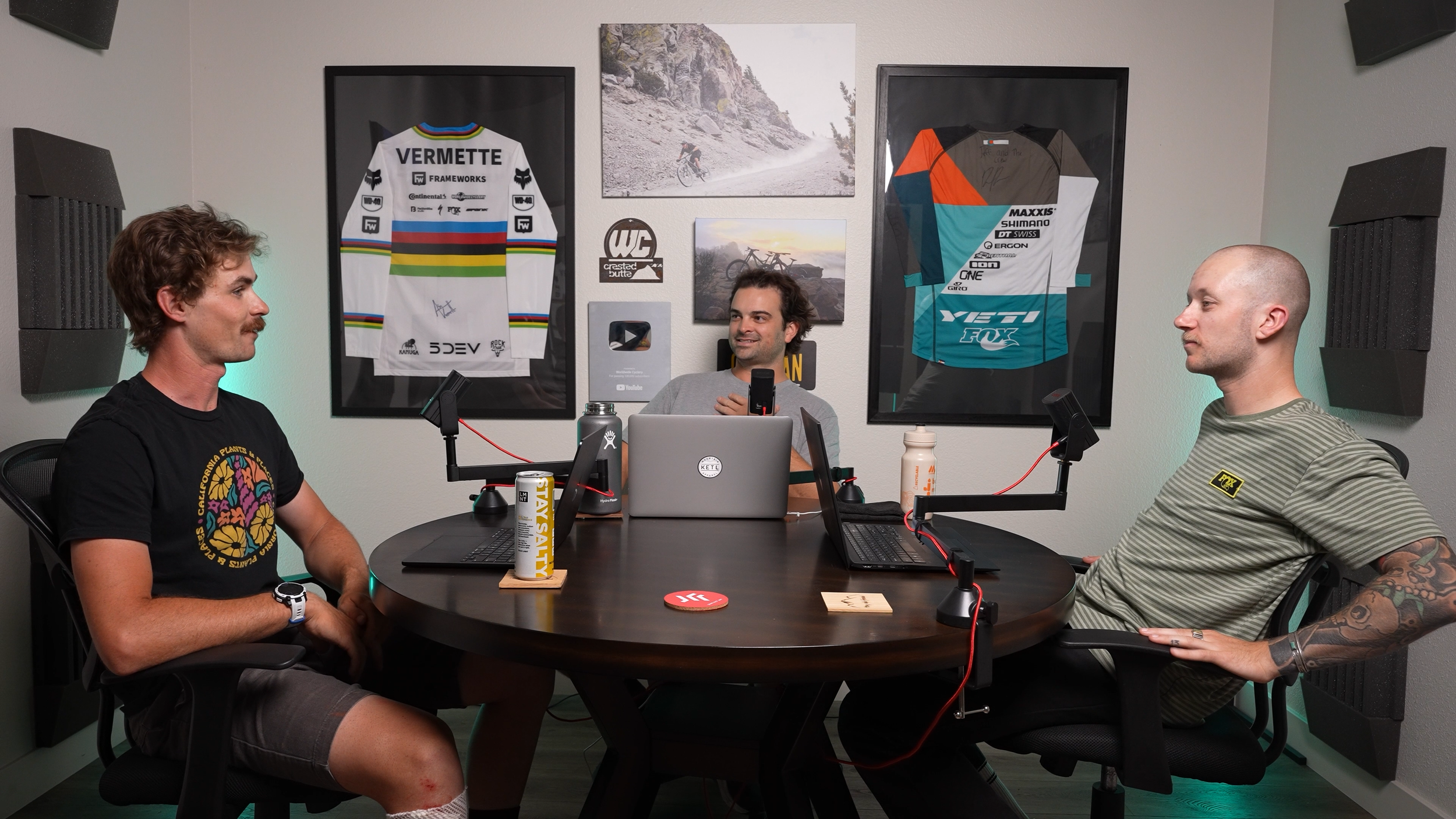
In today's episode, Jared, Liam & Tydeman discuss the new Revel Ranger and their new bike builds before we hear about Tydeman's amazing bikepacking tour of Tuscany. Then we get into some classic listener questions ranging from prepping for Downieville to utilizing Garmin watch features to train and everything in between. Tune in!
Our YouTube channel: www.youtube.com/channel/UCxZoC1sIG-vVtLsJDSbeYyw
Worldwide Cyclery Instagram: www.instagram.com/worldwidecyclery/
MTB Podcast Instagram: www.instagram.com/mtbpodcast/
Submit any and all questions to podcast@worldwidecyclery.com
The MTB Podcast is presented by Worldwide Cyclery, the online retailer for serious mountain bikers.
Don't miss an episode – Subscribe now.
If you are one strange human that would like to read a transcript of the podcast above, continue reading below!
Episode 181 delivers an in-depth breakdown of the newly re-designed Revel Ranger V2, first-hand insights on epic bike-packing variables, and a look into the precise economics of maintaining a performance drivetrain via hot-melt chain waxing.
Intro & The "Golden Hour" Conflict Jared, Liam, and Tydeman open the show by addressing "Zach’s Words of Wisdom" (Zwow): "Exhaustion and peace can exist in the same body." The crew highlights the intense physical divide between morning riders and afternoon riders. Liam and Tydeman note that while evening "golden hour" sessions are aesthetically unmatched, hammering high-intensity training intervals at 6:30 p.m. routinely spikes heart rates to 190+ bpm, ruining sleep cycles.
The Redesigned Revel Ranger V2 Launch The core highlight is the official release of the updated Revel Ranger. Both Liam and Tydeman have been testing custom builds since the Sea Otter Classic, logging roughly 200 miles each.
Engineering Overhaul: Designed by industry veteran Mike Gezy, the frame moves all pivot bearings completely inside the carbon linkage blocks rather than using exposed external configurations. It features expanding collet axles that interface with massive frame surface contact points, creating lateral rear-end stiffness that rivals full enduro frames.
The Custom Weight-Weenie Specs: Liam and Tydeman built their setups sub-26 lbs ready to ride, utilizing a Fox 34 SC (130mm fork), Float SL rear shock, CeramicSpeed oversized pulley wheels, and a combination of 120 TPI WTB Peacekeeper and Macro tires.
Kinematics: The platform eliminates suspension bob in open mode. Liam noted he only reached for his lock-out toggle five times during a brutal 5-hour, 7,000-ft vertical backcountry testing block.
Tydeman’s Tuscany Trail Odyssey Tydeman details completing the Tuscany Trail in Italy with his dad, tackling a 450-kilometer (280-mile) route with 20,000 feet of elevation gain over four days. He rode a custom titanium Trail One L Hefe hardtail configured as a high-speed fire-road weapon. Tydeman warns about mass-participation dynamics: with over 600 people camping in a single village soccer field, logistics like bathroom lines and town supply raids can detract from the remote adventure appeal.
🔑 Key Points & Discussion Topics
The F1 Falcon: Daniel’s Fun Fact of the day points out that a Peregrine Falcon hits speeds over 240 mph during a specialized hunting dive—faster than a Formula 1 car's top speed.
Turd Training Progression: The hosts prep for back-to-back weekends of elite local racing, attacking the Great Descent (55 miles, 10,000 ft of descending, 5,000 ft of climbing) immediately followed by the Lost and Found gravel event.
The Output/Input Metric: Jared discusses how age forces a rider to analyze exactly how food digests before a ride. Heavy fats like eggs and hash browns create severe mid-day indigestion on high-output days, forcing a transition to high-glycemic bland carbs like morning oats soaked in maple syrup.
⚙️ Technical Deep Dive: The Chain-Waxing Matrix
Question: If a cross-country rider uses a full ultrasonic cleaning system to strip their chains down to raw metal and applies a hot-melt hot wax (like Silca's system), how often should they apply a wax-based liquid top-off (like Squirt), and what is the lifespan before a full re-dip is required?
The Top-Off Interval: For dry, dusty mid-Atlantic trail conditions, apply a liquid wax top-off every 100 to 150 miles. For standard 2-hour midweek training sessions, you can clear two or three rides safely between top-offs. Always apply the liquid top-off the night before a ride to allow the carrier carrier fluid to fully evaporate.
The Full Hot-Wax Lifecycle: A premium base hot wax can comfortably survive 500 miles of trail use if consistently topped off with liquid wax.
The Multi-Chain Strategy: Neil’s approach of keeping an inventory of eight pre-stripped, hot-waxed chains is highly recommended by the hosts. It allows you to rotate fresh chains in seconds, entirely bypassing the tedious weekly cleaning cycle by batch-cooking all eight chains in a slow-cooker wax pot once every few months.
🛠️ Segment: How It Aged
RockShox Torque Caps
The Technology: Oversized front hub end caps that expand the standard 15mm axle interface up to a massive 28mm mounting footprint against the fork drop-out.
The Verdict: A Mixed Case (Fine Wine for XC 🍷 / Spoiled Milk for Gravity 🥛)
Analysis: For lightweight short-travel platforms, torque caps are excellent because they noticeably stiffen front-end tracking and make wheel alignment simple when dropping the hub into the fork. However, for 38mm long-travel enduro forks (like the Zeb), the front end is already so structurally rigid that adding torque caps forces an unforgiving, harsh ride profile for lighter riders (~150 lbs) who actually require subtle wheel deflection for compliance in off-camber rock gardens.
RockShox Torque Caps
The Technology: Oversized front hub end caps that expand the standard 15mm axle interface up to a massive 28mm mounting footprint against the fork drop-out.
The Verdict: A Mixed Case (Fine Wine for XC 🍷 / Spoiled Milk for Gravity 🥛)
Analysis: For lightweight short-travel platforms, torque caps are excellent because they noticeably stiffen front-end tracking and make wheel alignment simple when dropping the hub into the fork. However, for 38mm long-travel enduro forks (like the Zeb), the front end is already so structurally rigid that adding torque caps forces an unforgiving, harsh ride profile for lighter riders (~150 lbs) who actually require subtle wheel deflection for compliance in off-camber rock gardens.
Cross-Country Racing Tire Selection Matrix
For a technical, high-consequence multi-day stage race like the Downieville Classic or a rugged XC venue, tire casing selection must optimize rolling efficiency against sharp rock deflection:
The Lightweight Performance Setup: The WTB Peacekeeper (120 TPI) up front paired with a Macro out back. The high thread count provides an ultra-supple, lively ride quality that conforms smoothly to loose-over-hardpack surfaces.
The Heavy-Rock Transition Setup: Moving from an aggressive trail setup (Maxxis Assegai/Dissector) down to a Specialized Chisel or Maxxis Forecaster/Recon casing allows an intermediate descender to retain critical side-knob braking bite while shedding massive rotational weight for technical climbs.
The Race-Day Rule: Never race on a patched tire or a plug. If a 1/4-inch hole is successfully held by a Dynaplug or WTB anchor tool, keep it as your daily trail training tire, but install fresh rubber for race day to prevent high-velocity plug blowouts mid-track.
🏁 TL;DR
Episode 181 breaks down the structural stiffness and clean pivot-bearing layout of the all-new Revel Ranger V2. Tydeman shares his tales of dodging hundreds of bike-packers for bathroom lines on the Tuscany Trail, the crew outlines the ultimate maintenance cycle for a hot-melt chain-waxing routine, and Liam explains why RockShox Torque Caps are a necessary win for lightweight XC steering precision but an unnecessary stiffness penalty on heavy-duty gravity forks.